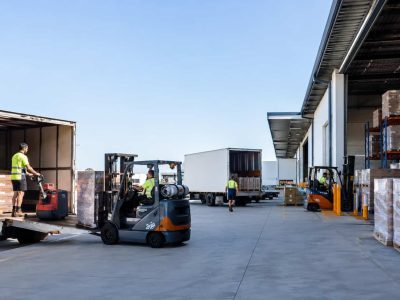
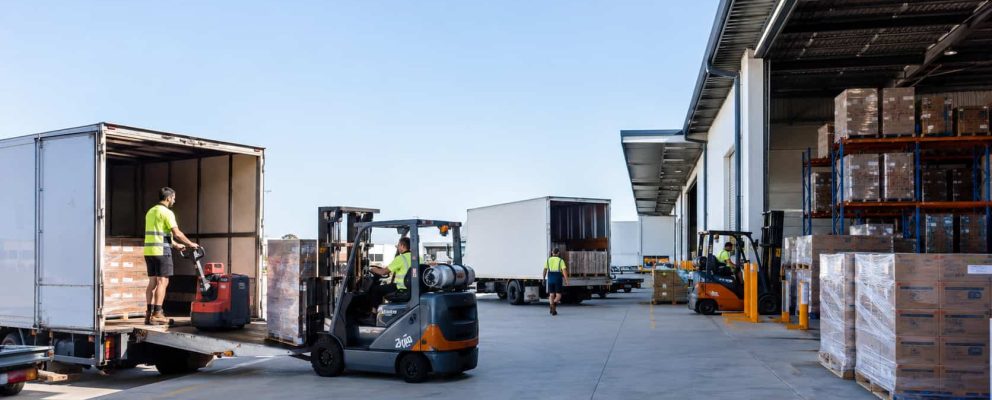
Cross-docking vs warehousing comes down to how quickly your goods need to move and how much control you need before dispatch. Cross-docking works best when freight can move quickly from inbound transport to outbound delivery, while warehousing is better when stock needs to be stored, picked, packed, kitted, checked, returned or managed over time.
For Perth businesses, the right choice depends on your stock flow, customer demand, delivery windows and internal capacity. Some businesses need fast freight movement with minimal storage. Others need a reliable warehousing partner to manage inventory, reduce handling issues and support streamlined operations.
At Bossna Logistics, we understand the transport demands of Perth businesses. Whether you need freight transport, warehouse & distribution support, or a mix of both, the goal is the same: keep your goods handled safely and efficiently while reducing unnecessary transport and storage costs.
Quick Summary
- Cross-docking is best when goods need to move quickly from inbound freight to outbound delivery with little or no storage time.
- Warehousing is better when stock needs storage, picking, packing, kitting, returns handling or inventory control.
- Cross-docking can help reduce storage costs and speed up distribution when demand is predictable.
- Warehousing gives your business more flexibility when demand changes or stock needs to be managed over time.
- Many Perth businesses benefit from using both, with fast-moving goods cross-docked and slower-moving stock held in a warehouse.
- The right choice depends on your product type, delivery schedule, stock volume, customer demand and how much handling is required before dispatch.
What Is Cross-Docking?
Cross-docking is a logistics process where goods arrive at a facility and are moved quickly onto outbound transport, usually with little or no storage time. Instead of sitting in a warehouse for days or weeks, freight is received, checked, sorted and dispatched as efficiently as possible.
Think of cross-docking as a transfer point. Goods come in from a supplier, container or freight carrier, then move out to customers, stores, project sites or regional delivery routes.
This model works best when freight is already labelled, allocated and ready to move. It relies on reliable scheduling, clear paperwork and well-coordinated freight transport so inbound and outbound movements line up without unnecessary delays.
For Perth businesses moving high volumes across metro or regional WA, cross-docking can be a practical way to reduce storage time, minimise double-handling and keep goods moving through the supply chain.
What Is Warehousing?
Warehousing is the storage and management of goods before they are dispatched. Instead of moving freight straight through a facility, stock is held securely until it is needed for orders, projects, retail supply, ecommerce fulfilment or regional distribution.
A warehouse can do more than store pallets. It can support stock control, order picking, packing, kitting, returns handling, stock rotation and dispatch planning. This gives your business more control when goods do not need to move all at once.
Warehousing is especially useful when demand changes, stock arrives before customers are ready, or your team needs a safe and organised place to hold inventory. It also helps reduce pressure on your own premises, especially if you do not have the space, equipment or staff to manage freight in-house.
For Perth businesses that need trusted and hassle-free solutions, Bossna’s warehouse & distribution services can help keep stock handled safely and efficiently from arrival through to dispatch.
When Cross-Docking Works Best
Cross-docking works best when goods are ready to move and demand is predictable. It is designed for freight that does not need long-term storage, detailed sorting or extra handling before delivery.
This model is often a good fit when your business is moving high volumes of stock through Perth or across Western Australia. It can help reduce storage time, speed up delivery and keep freight moving between suppliers, customers, retail locations or project sites.
Cross-docking may suit your business if:
- Your goods already have confirmed delivery points
- Your demand is consistent and easy to forecast
- Freight is palletised, labelled and ready for dispatch
- Products do not need picking, packing or kitting
- You have reliable inbound and outbound transport schedules
- You need to move goods quickly through Perth or regional WA
- You want to reduce unnecessary storage and double-handling
Common examples include retail replenishment, wholesale pallet movements, pre-allocated customer orders, project freight, perishable goods and regular regional delivery runs.
For businesses distributing goods outside the Perth metro area, Bossna’s WA state freight support can help coordinate reliable movement across Western Australia. When timing matters, cross-docking can be a practical way to keep freight moving without tying up space in storage.
When Warehousing Is the Better Choice
Warehousing is the better choice when your stock needs more control before it reaches the customer. If goods need to be stored, checked, picked, packed, kitted, returned or dispatched in smaller orders, a warehouse gives your business the structure to manage that properly.
This is especially useful for Perth businesses with a wider SKU range or demand that changes from week to week. Instead of forcing freight to move before customers are ready, warehousing allows you to hold inventory safely and release it when needed.
Warehousing may suit your business if:
- You manage multiple products or SKUs
- Customer demand changes throughout the month or season
- You need stock available for future orders
- Orders need picking and packing before dispatch
- Products need kitting, bundling or light assembly
- Returns need to be checked, sorted or restocked
- Stock arrives before your customers are ready to receive it
- You want better visibility over inventory and fulfilment
For example, a Perth wholesaler may receive a container of stock where only part of the shipment is ready for immediate delivery. In that case, warehousing allows the remaining goods to be stored securely, managed properly and dispatched as orders come through.
For businesses that need more flexibility, warehouse storage in Perth can provide a practical buffer between incoming freight and customer delivery. It helps support streamlined operations while keeping your stock handled safely and efficiently.
Cross-Docking vs Warehousing: Cost and Speed Trade-Offs
The biggest difference between cross-docking and warehousing is the balance between speed, cost and control. Cross-docking is built to move goods quickly. Warehousing is built to manage goods properly before they move.
| Factor | Cross-docking | Warehousing |
|---|---|---|
| Speed | Faster when freight is ready to move | Slower, but more controlled |
| Storage cost | Lower if goods move quickly | Higher, but supports stock management |
| Handling | Lower when freight is pre-sorted | Higher, but supports picking, packing and fulfilment |
| Flexibility | Limited if demand changes | Stronger for variable demand |
| Best for | High-throughput freight | Managed stock and order fulfilment |
| Main risk | Delays if timing is poor | Extra cost if stock sits too long |
Cross-docking can help reduce storage costs because goods spend less time in a facility. It can also reduce handling when freight is already sorted, labelled and allocated before arrival.
However, cross-docking only works well when the timing is right. If suppliers are late, paperwork is unclear, delivery points change or outbound transport is not ready, the process can quickly become less efficient.
Warehousing may involve more storage and handling costs, but it gives your business more control. Stock can be checked, counted, picked, packed and dispatched when customers are ready. This can reduce rushed freight, missed orders and avoidable handling issues.
This is where the benefits of warehousing services become clear, especially for businesses that need stock visibility, reliable fulfilment and streamlined operations.
Why Fastest Is Not Always the Best Option
Cross-docking is often faster than warehousing, but fastest does not always mean best. Speed only helps when your freight is ready, your transport schedule is reliable and your customers are prepared to receive the goods.
If one part of the process breaks down, cross-docking can create pressure. A late supplier, incorrect labelling, missing paperwork or changed delivery window can mean goods need to be held, reworked or redirected. Without the right planning, the time saved at one point can be lost somewhere else.
Warehousing gives your business more room to manage these changes. Stock can be stored securely, checked properly and dispatched when the timing is right. This is especially useful for businesses with seasonal peaks, mixed product lines, changing customer demand or orders that need to be split across multiple delivery points.
Strong stock visibility also matters. Knowing what you have, where it is and when it needs to move can prevent missed orders and reduce unnecessary freight costs. This is why modern warehouse management plays an important role in keeping distribution accurate and reliable.
For many Perth businesses, the best logistics model is not simply the fastest one. It is the one that keeps goods moving safely, reduces avoidable costs and supports premium-class customer service.
Can Your Business Use Both Cross-Docking and Warehousing?
Yes. Many Perth businesses do not need to choose one model permanently. In practice, the best option is often a mix of both, depending on how different parts of your stock move.
Fast-moving goods can be cross-docked when they are already sold, labelled and ready for dispatch. Slower-moving stock can be stored in a warehouse until customer demand catches up. This gives your business the speed of cross-docking where it makes sense, while still keeping the control and flexibility of warehousing.
For example, a Perth wholesaler may cross-dock pre-sold pallets for immediate delivery, while warehousing backup stock for future orders. An ecommerce business may store inventory in a warehouse, then use fast dispatch processes to move customer orders quickly once they are picked and packed.
A blended logistics model can also help when goods need to be split across different delivery points. Bulk freight can arrive in one shipment, then be separated into metro, regional or customer-specific deliveries. Returns can also be processed through warehouse operations instead of creating extra work for your internal team.
Working with a trusted 3PL provider can help you combine freight, storage and distribution into a one-stop solution tailored to your needs. This keeps your operation more flexible while helping reduce unnecessary transport and storage costs.
How to Choose the Right Option for Your Perth Distribution Needs
The right choice depends on how your goods move, how predictable your demand is and how much handling is needed before dispatch. A simple way to look at it is this: choose cross-docking when your freight is ready to move, and choose warehousing when your stock needs to be managed.
Cross-docking may be the better fit if:
- Your goods already have confirmed delivery points
- Your demand is predictable
- Your freight is labelled, packed and ready to move on arrival
- You want to reduce storage time
- Your inbound and outbound transport schedules are reliable
- You are moving high volumes through Perth or across Western Australia
- Your goods do not need picking, packing, kitting or returns handling
Warehousing may be the better fit if:
- You need to store stock before dispatch
- You manage multiple SKUs
- Customer demand changes often
- Orders need to be picked, packed or checked
- You need kitting, bundling or light assembly
- You process returns
- You want better inventory visibility
- You need more control over fulfilment and delivery timing
For a broader breakdown, this guide on warehouse and distribution explains how storage, fulfilment and delivery support work together.
If you are still unsure, look at the part of your operation that causes the most pressure. If your main issue is goods sitting too long before delivery, cross-docking may help. If your main issue is stock accuracy, changing demand or order fulfilment, warehousing is likely the safer option.
Cross-Docking vs Warehousing: Which Is Better?
Neither option is automatically better. The right choice depends on your stock flow, delivery timing, product type and customer demand.
Cross-docking is better when speed is the priority and your freight can move straight through with minimal handling. It suits high-throughput goods, predictable demand and products that are already packed, labelled and allocated before arrival.
Warehousing is better when your business needs more control. If your stock needs to be stored, picked, packed, checked, kitted, returned or dispatched in stages, warehousing gives you the flexibility to manage those steps properly.
For many Perth businesses, the best solution is a mix of both. Cross-docking can keep fast-moving freight moving, while warehousing can support slower-moving stock, seasonal demand, ecommerce fulfilment and more detailed inventory management.
The key is not choosing the fastest or cheapest model in isolation. It is choosing the model that helps your business reduce delays, avoid unnecessary handling, improve delivery reliability and keep customers satisfied.
Speak to Bossna About Perth Freight and Warehousing Support
Need help choosing between cross-docking and warehousing? Bossna Logistics is your Perth logistics partner for trusted and hassle-free solutions tailored to your needs.
We can support your freight transport, warehouse storage and warehouse & distribution requirements with practical advice, reliable handling and premium-class customer service. Whether you need fast freight movement, secure storage, order fulfilment support or a blend of services, we can help you build a logistics setup that works for your business.
Let us handle your logistics while you focus on growing your business.